




Why the Sofa Remains the Heart of the British Living Room | MODA Britain

Craftsmanship Stories explores the furniture, materials and quieter details that shape modern British living. From timeless sofas and warm interiors to heritage design influences across South Devon, the journal reflects MODA Britain’s philosophy of comfort, craftsmanship and considered living.
Craftsmanship Stories
Why the Sofa Remains the Heart of the British Living Room
There are very few pieces of furniture that shape a home quite like a sofa.
Long before interiors became curated for social media or designed around trends, the sofa existed as something far simpler and far more important — a place to gather, to pause and to live comfortably. It is where conversations drift into the evening, where books are opened on slower Sundays, where families settle after long days and where rooms begin to feel personal rather than simply decorated.
At MODA Britain, we believe the best interiors are not built around excess or constant reinvention, but around permanence, proportion and comfort. And perhaps no object reflects that philosophy more naturally than the sofa.
Because while trends continue to change around it, the role of the sofa has remained remarkably consistent: it quietly becomes the centre of modern living.
A Brief History of the Sofa
The origins of the sofa stretch back centuries, evolving from formal seating found within aristocratic European interiors into something softer, warmer and more closely connected to everyday life.
Early British drawing rooms were built around conversation and hosting, often featuring carefully upholstered seating designed as much for elegance as comfort. Over time, these interiors became less formal and more relaxed. Homes shifted away from rigid presentation toward spaces that felt genuinely lived in.
The sofa evolved with them.
Deep cushions replaced stiff structures. Softer fabrics became more desirable. Rooms prioritised comfort alongside craftsmanship. Traditional British styles such as the Chesterfield brought character and permanence into interiors, while later designs introduced cleaner lines and more contemporary proportions.
Yet despite changing styles, the purpose remained largely unchanged.
A sofa was never simply somewhere to sit.
It became part of the atmosphere of a home.
Modern British Living and the Return of Comfort
Today, many people are moving away from interiors that feel overly polished or temporary. There is a growing appreciation for homes that feel calm, layered and comfortable — spaces designed around everyday living rather than constant presentation.
This shift is especially visible across modern British interiors.
Neutral palettes, natural materials and softer textures have replaced colder, trend-driven styling. Rooms are becoming quieter again. More personal. More permanent.
And the sofa now plays an even more central role within that environment.
Open-plan living has transformed the sofa into more than occasional seating. It anchors the room itself. It creates structure within shared spaces. It determines how people gather, relax and interact throughout the day.
At MODA Britain, we believe the right sofa should feel visually settled within a room rather than overpowering it. It should invite comfort naturally while contributing to the wider atmosphere of the home.
This is where proportion matters.
A well-balanced sofa allows a room to breathe. It complements lighting, textures and surrounding furniture rather than competing with them. The best interiors rarely feel crowded — they feel composed.
Finding the Right Sofa for Your Home
Choosing the right sofa is rarely about simply following trends.
The most successful interiors are usually built around pieces that feel timeless rather than seasonal. Sofas, in particular, should be chosen for the way they support everyday life over many years, not simply for the way they photograph in the moment.
Scale is one of the most important considerations.
Oversized furniture can quickly overwhelm a room, while smaller spaces benefit from cleaner lines and more balanced proportions. A sofa should sit naturally within the architecture of a home, creating warmth without visual heaviness.
Fabric also changes the character of a room dramatically.
Natural textures, woven fabrics and softer neutral tones tend to age more gracefully than louder colours or overly trend-led materials. Warm greys, oat tones, muted stone colours and textured linens create a quieter atmosphere that feels easier to live with over time.
Comfort matters equally.
Deep seating, supportive cushions and softer silhouettes encourage a slower pace of living. The best sofas invite people to stay longer, relax more fully and settle naturally into the rhythms of home life.
At MODA Britain, we often look for pieces that feel refined without becoming overly formal — furniture that balances comfort with craftsmanship in a way that feels effortless.
Materials That Improve With Time
One of the defining qualities of well-made furniture is its ability to improve through use rather than deteriorate from it.
Hardwood frames develop longevity. Natural fabrics soften beautifully over time. Textures gain warmth and character. A quality sofa begins to feel more personal the longer it becomes part of a home.
This sense of permanence matters increasingly within modern interiors.
In a world driven by constant replacement, there is something reassuring about furniture designed to last beyond short-term trends. Rooms feel calmer when they are built around fewer, better pieces chosen with intention.
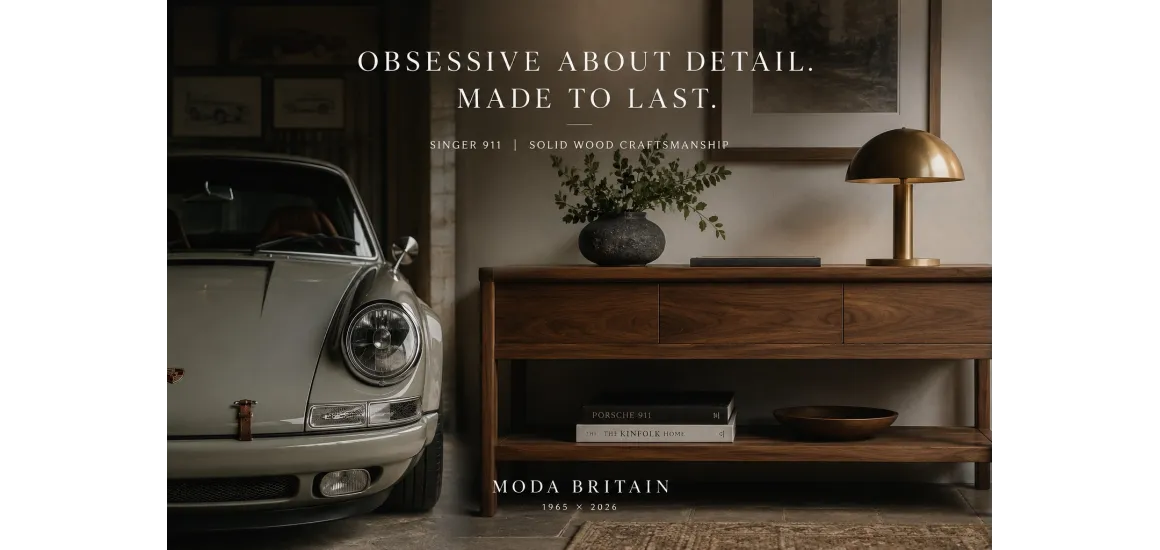
The MODA philosophy of 1965 × 2026 reflects exactly this balance — classic warmth and proportion reworked for contemporary homes with cleaner lines, simpler living and a stronger sense of permanence.
A sofa should support that philosophy quietly.
Not demanding attention, but shaping the room through comfort, balance and presence.
South Devon and Softer Living
Across South Devon, there remains a natural appreciation for interiors that feel warm, relaxed and genuinely lived in.
Homes here are often shaped gradually over time rather than redesigned overnight. Softer coastal light, natural materials and calmer surroundings create interiors that prioritise atmosphere over perfection.
This slower approach to living influences much of the MODA collection.
Sofas become less about statement and more about comfort. Rooms are layered with texture rather than cluttered with decoration. Warm lighting replaces harsh brightness. Furniture feels chosen for longevity rather than novelty.
There is a quiet confidence within homes designed this way.
And increasingly, people are seeking that same feeling within contemporary interiors everywhere.
The Sofa as a Foundation Piece
The best sofas rarely announce themselves loudly.
Instead, they become part of the daily rhythm of a home — supporting evenings, conversations, quiet mornings and slower weekends without demanding attention.
At MODA Britain, we believe these quieter pieces are often the most important.
Because good interiors are rarely built through excess. They are built through thoughtful choices repeated consistently over time.
The right sofa does more than complete a room.
It shapes the way a home feels to live in.
MODA Britain
1965 × 2026
Classic warmth and proportion, reworked for contemporary homes with cleaner lines, simpler living and a stronger sense of permanence.
Comments
No comment at this time!
Leave your comment